Diesel, biodiesel & the honest math.
With diesel in record territory, homegrown fuel sounds like the dream. Moringa can play a part — just not the part most people expect. Here’s what’s actually going on at the pump, and what a co-op can realistically do about it.
What’s happening at the pump
Diesel prices keep setting records as the U.S. war with Iran disrupts the world’s fuel supply (as reported by NPR). Weekly data put the national average at $6.529 for the week ending September 21, 2026, with California highest at $8.246. For perspective: the 2008 peak of about $4.74, adjusted for inflation, would be roughly $7.20 today.
Local tip
Imperial Dam LTVA is in California, where diesel runs over $8. Fill up on the Arizona side in Yuma. On a 32-gallon tank that can save around $50 a fill.
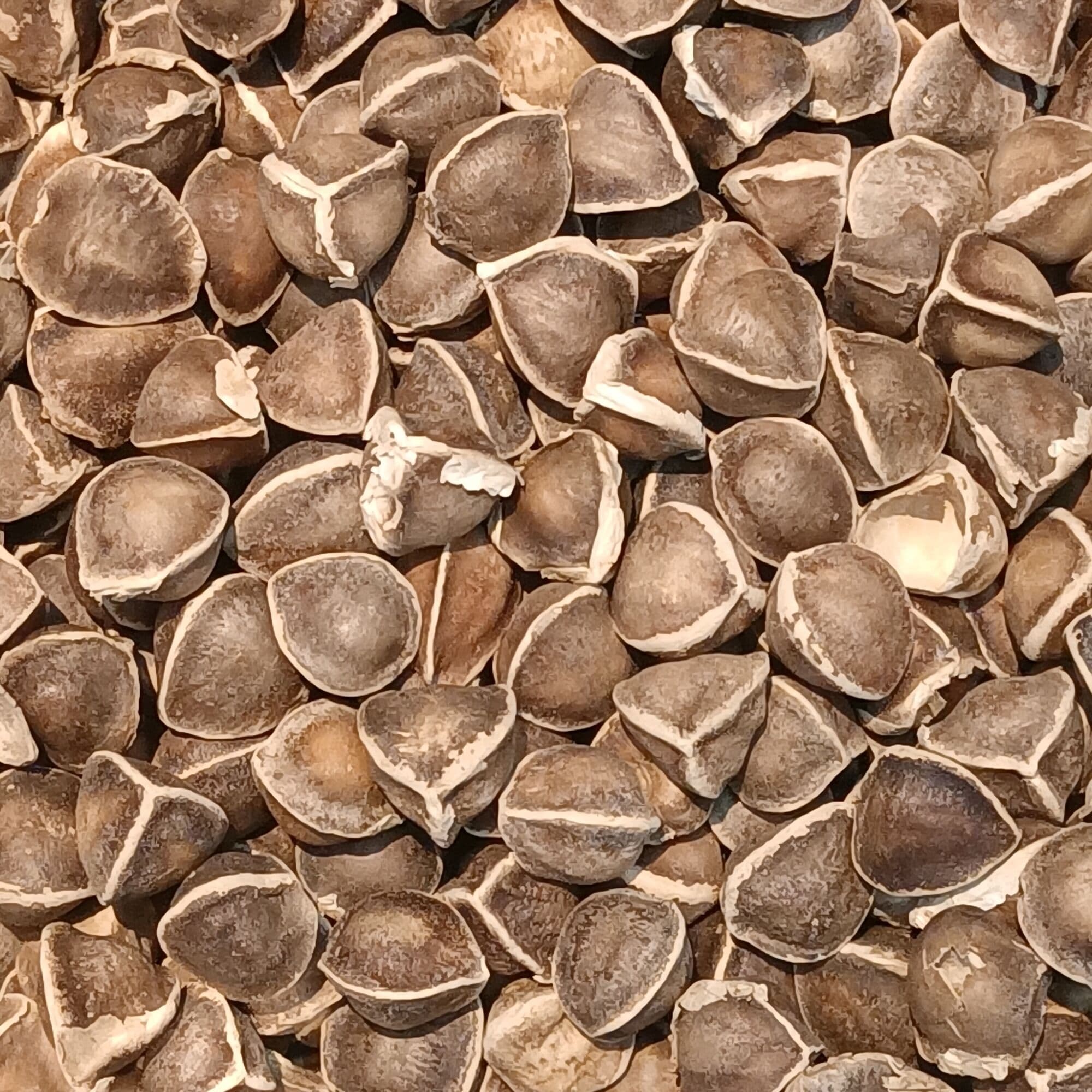
The math on moringa oil
- One gallon of oil takes roughly 30–40 pounds of seed with a small home press.
- A 32-gallon pickup tank would need over half a ton of seed per fill-up.
- A mature tropical tree yields a few pounds up to maybe 10 pounds of seed a year.
- A half-acre orchard near Yuma might make 15–30 gallons of oil a year — about one tank.
- Cosmetic ben oil sells for well over $100 a gallon. Diesel is around $6–8.
Conclusion: moringa won’t replace diesel. Sell the oil, buy fuel with the money, and make biodiesel from something cheaper.
The real feedstock: restaurant waste oil
Almost every home and small-farm biodiesel maker uses waste vegetable oil (WVO) from restaurants. It’s often free, because restaurants pay to get rid of it. Yuma has a lot of restaurants. A co-op that collects fryer oil, makes biodiesel, and runs it in its own tractors, generators and pumps turns a restaurant’s cost into the farm’s fuel — and the leftover glycerin into soap.
How biodiesel is made
The chemistry is called transesterification. Vegetable oil molecules are big and thick. React the oil with methanol, using lye as a catalyst, and each molecule splits into two things: biodiesel, which is thin, burns like diesel and floats; and glycerin, thick and brown, which sinks. Roughly, 100 gallons of oil plus 20 gallons of methanol yields about 100 gallons of biodiesel and 20 gallons of glycerin.
- Clean the oil. Filter out food bits and drive off all water. Water is the #1 cause of failed batches.
- Titrate. Used oil contains free fatty acids that use up some of the lye; a simple titration test tells you how much extra to add. Never skip it — it decides whether the batch works.
- Make the methoxide by dissolving the measured lye into methanol in a sealed container.
- React the warm oil with the methoxide while mixing, below methanol’s boiling point.
- Settle 8–24 hours and drain the glycerin from the bottom.
- Wash out soap, leftover lye and methanol with water, 3–4 times until the water runs clear.
- Dry until the fuel turns from cloudy to clear.
- Test — the 27/3 methanol test shows whether the reaction finished; a shake-with-water test shows leftover soap.
- Filter to 1–5 microns before it goes in any tank.
Learn on one-liter test batches until they pass every time. Only then does it make sense to build a 40–50 gallon processor (typically an old electric water heater or a cone-bottom tank with a pump) — and scaling up multiplies the hazard. The co-op would teach the exact recipe hands-on, not from a web page.
Safety first: these chemicals can kill or blind you
Methanol, lye, and methoxide
Methanol is poisonous through skin and fumes and can cause permanent blindness. It’s highly flammable, and its flame is nearly invisible in daylight.
Lye (sodium or potassium hydroxide) causes severe chemical burns, especially to the eyes.
Mixed together they make sodium methoxide — worse than either one alone.
- Chemical splash goggles (not just safety glasses), nitrile or butyl gloves, long sleeves, and an organic-vapor respirator.
- Work outdoors or with strong ventilation. No flames, sparks or smoking anywhere nearby.
- Keep a running hose within reach at all times.
- Use only HDPE (#2) plastic or stainless/plain steel. Never aluminum, tin or zinc (galvanized) — lye eats them and releases flammable hydrogen.
- Keep kids and pets far away.
Modern diesels: be careful
A new truck — say a 2022 Ram 6.7L Cummins — is not the old 12-valve that would run on almost anything:
- A high-pressure common-rail fuel system with precise injectors that cost roughly $3,000–$5,000+ to replace. Dirty or off-spec fuel ruins them.
- A DPF that periodically burns off soot. During those regens some fuel washes into the engine oil; diesel evaporates back out, biodiesel doesn’t, so it builds up and thins the oil.
- A DEF/SCR emissions system that bad fuel can damage.
What the maker allows
Blends up to B20 (20% biodiesel), where the biodiesel meets ASTM D6751 before blending. Check the owner’s manual for your exact engine.
Homemade B100 is not approved; expect a denied warranty claim if a failed part is traced to it. Never run straight vegetable oil in a modern common-rail diesel.
Proving homemade fuel meets ASTM D6751 takes a lab test of roughly $500–$1,000.
Best use of homemade biodiesel: older diesels, tractors and generators, where a problem costs hundreds instead of thousands. In a new truck, keep it to B20 or lower.
Cold weather
Biodiesel from used cooking oil starts clouding and gelling around 32–45°F, much sooner than regular diesel. Low-desert winters are mild, but keep blends low on cold nights — and in places like Arkansas, skip it December through February.
Taxes & the law
Fuel burned on public roads is subject to federal and state fuel taxes. The IRS expects even home producers to pay excise tax on road fuel (Form 720), and larger producers must register (Form 637). Off-road use — tractors, generators — is treated differently. Talk to a tax professional before running homemade fuel on the highway.