Between the dam and the river town.
The target area runs from Imperial Dam, on the California side of the Colorado River, about 40 minutes down to Yuma, Arizona. Here, land comes in two very different kinds: land with water, and land without. Only one of them grows an orchard.
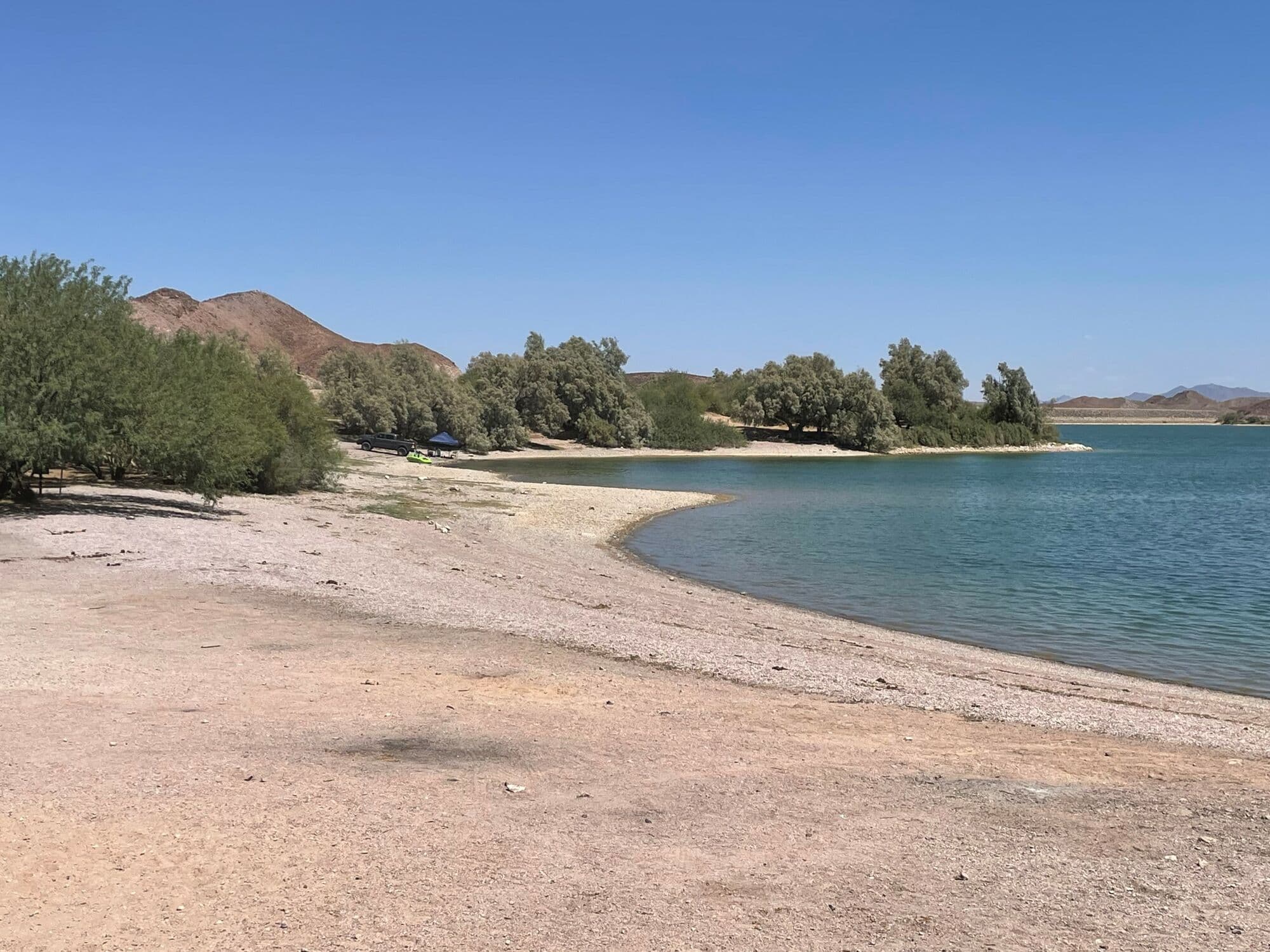
Base camp: Imperial Dam LTVA
Imperial Dam Long-Term Visitor Area is run by the BLM’s El Centro Field Office on the California side, with a mailing location of Senator Wash Rd., Winterhaven, CA. It has two restroom buildings with outdoor showers, trash service, gray and black water dump sites, and potable water.
- The long-term permit has been $180 for September 15 – April 15 and is good at all BLM LTVAs.
- The BLM has proposed raising it to $600 (and the short-term permit from $40 to $200). It stayed at $180 last season — confirm with the Yuma Field Office before paying.
- After April 15, the maximum stay is 14 days in any 28-day period. That matters for any summer farm work: a crew needs somewhere to live year-round.
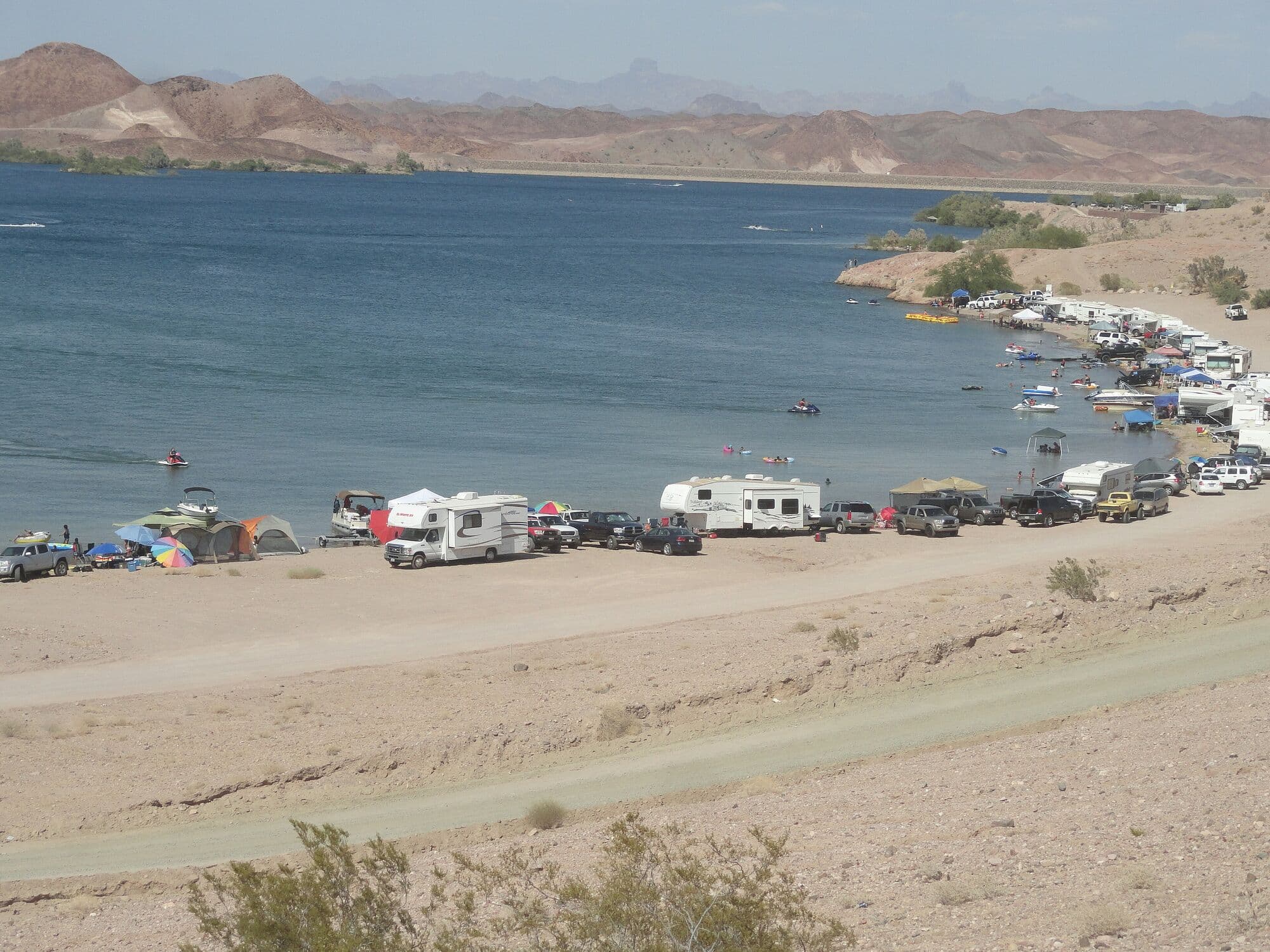
The area
Between Imperial Dam and Yuma is mostly the Bard and Winterhaven area of Imperial County, California — much of it farmland watered by the Colorado River. The Fort Yuma Quechan Indian Reservation covers a large part of this area; check whether any parcel is reservation land, which follows different rules.
The Arizona side — Yuma, Somerton and the Foothills — is worth searching too. California has stricter permitting and much higher fuel prices; Arizona may be simpler for a farm business.
Irrigated farmland: has water, costs more
This is the land that fits the plan. Recent examples seen on listing sites:
- About 36 acres of irrigated farmland near Bard, served by the Bard Water District.
- About 40 acres near Winterhaven with nearly 39 acres of water rights, growing lettuce in the Bard Water District.
- A 1-acre agricultural parcel minutes from Yuma with sheds, coops, an old mobile home, a power pole and working farms next door — the exact shape of a starter acre. Small parcels like this do come up.
Dry desert land: very cheap, no water
Winterhaven land listings have averaged about $2,282 per acre — for example 20 acres off Skyline Dr. for $13,888, or two 10-acre parcels together for $60,000. Most of these are out toward Highway 78 and the dune country, far from irrigation water. You can park a trailer on them. You can’t grow an orchard.
Dry land can still have a role
Cheap dry land could hold housing for the year-round crew, the processing barn, or solar — as long as the growing happens on land with water. It is not a substitute for water rights.
The Colorado River outlook
On August 21, 2026, the federal government issued its final decision on how to run the Colorado River after 2026. Arizona’s share is cut by 760,000 acre-feet a year for the next two years.
- Good news: According to an Arizona State University water expert, Yuma farmers who take Colorado River water face no cuts for now. Forced cuts would reach them only if statewide cuts nearly doubled.
- The warning: Federal projections show Yuma irrigation districts could face much deeper cuts starting in 2029 — enough to take more than 40% of Yuma farmland out of production.
So land inside an irrigation district with older, senior water rights is the safest bet in the Southwest right now — but not guaranteed forever. It’s also one more reason moringa fits: a drought-tolerant tree on drip irrigation is the kind of crop that suits a drier future.
Before buying anything
- Water first. Does the parcel have irrigation-district water rights? Ask the seller and the district directly how many water acres come with it and what water costs. (Bard Water District; Yuma County Water Users’ Association on the Arizona side.)
- Or a well. Is there a working well, or can one legally be drilled? Ask the Arizona Department of Water Resources (ADWR) about that exact parcel, and get a well driller’s view on depth and water quality. Some local groundwater is salty.
- Zoning. Can someone live in a trailer on it full-time? Ask Yuma County Development Services (or Imperial County on the California side). Some rural zoning allows it; some only temporarily or with a permit.
- Reservation status. Is it Quechan or Cocopah tribal land? Different rules apply — and a partnership could be an opportunity.
- Soil test. Especially for salt. UA Cooperative Extension in Yuma can help.
- Lease before you buy. Many local farmers lease out land. A few years on 5–20 leased irrigated acres proves the idea cheaply.