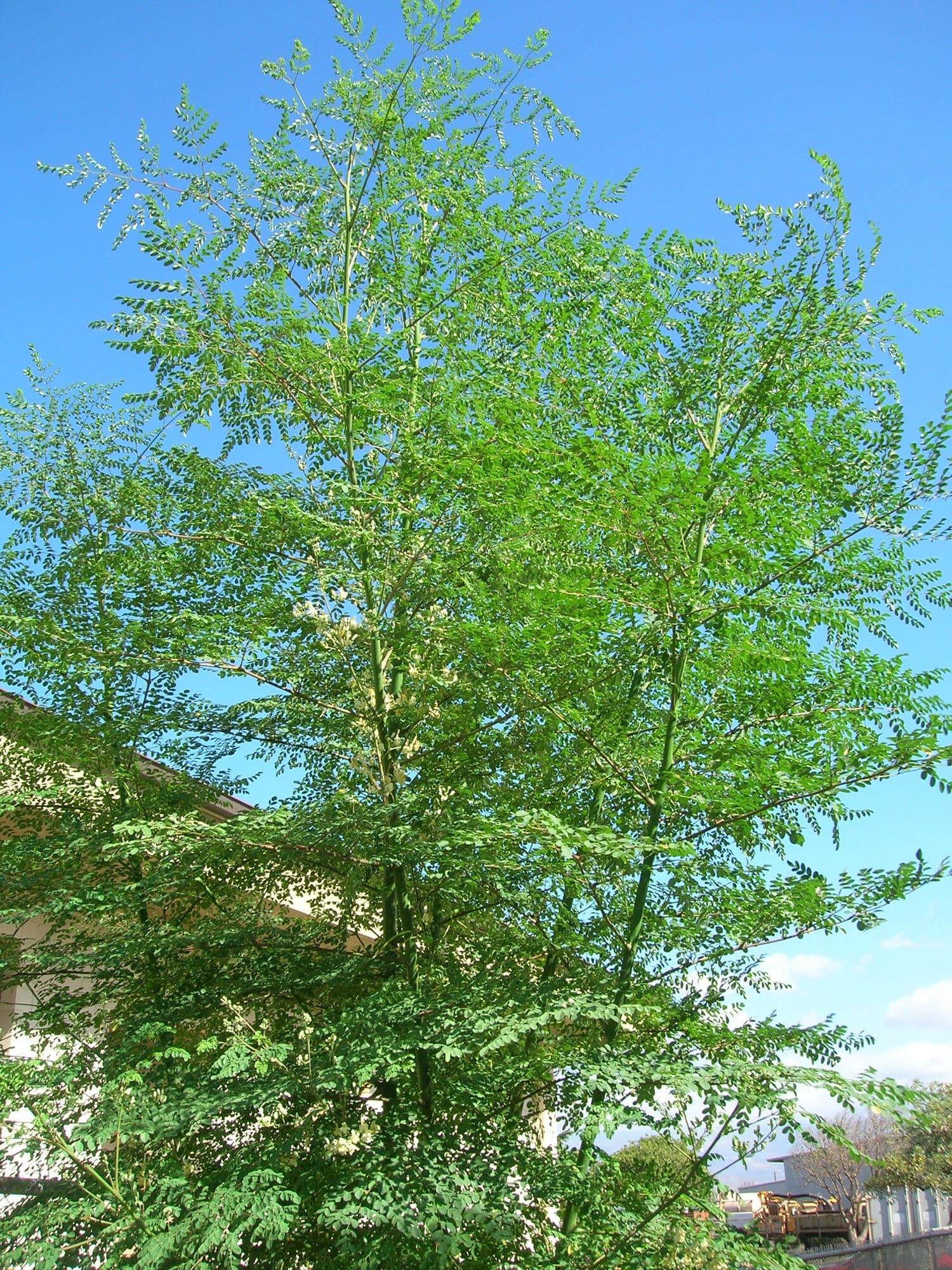
Moringa, the “miracle tree.”
Moringa oleifera is native to the foothills of the Himalayas in northern India and now grows throughout the tropics. It goes by drumstick tree, horseradish tree, ben-oil tree, malunggay in the Philippines. The nickname is earned: few single plants give people this much.
Leaves
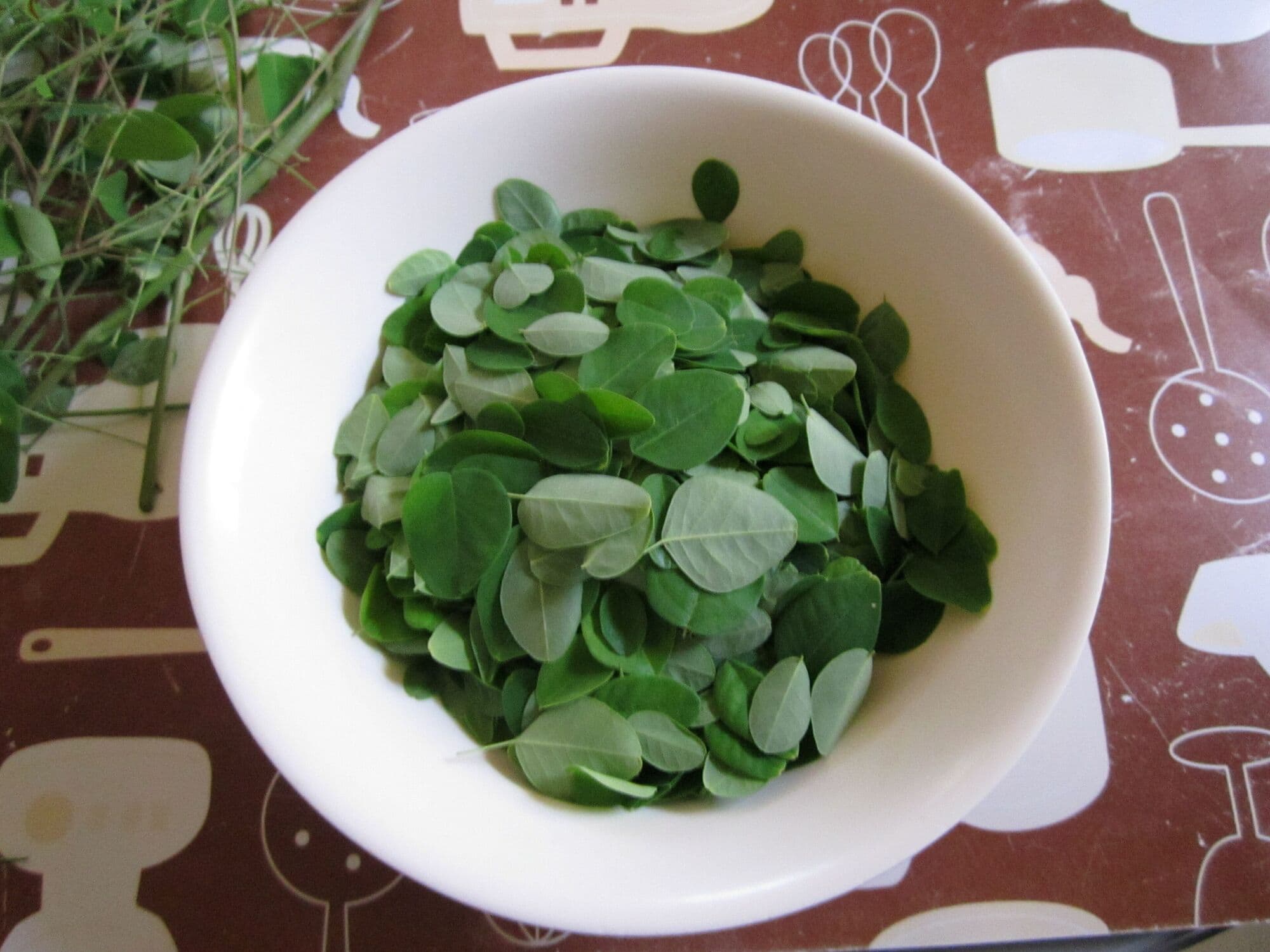
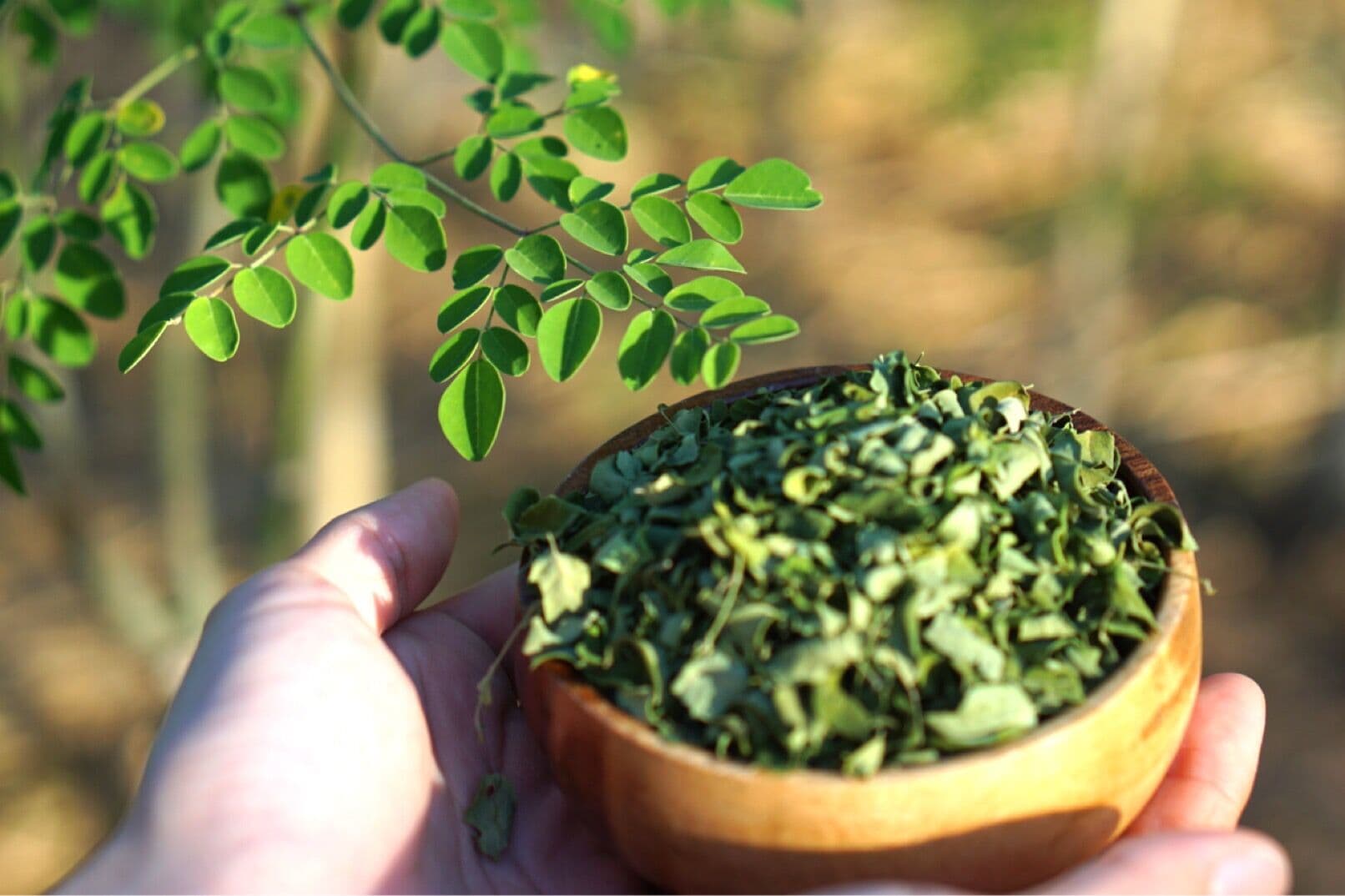
The leaves are the heart of it. They are about 25% protein by dry weight — unusual for a leaf — and rich in vitamins A and C, calcium, potassium and iron. You can eat them fresh like spinach, toss them into soups and eggs, steep them as tea, or dry and grind them into a fine green powder that keeps for months.
Leaves are also the fastest, most reliable harvest. Grown close together and cut back to knee height, a moringa bed regrows and can be cut again every 6–8 weeks through the warm season.
Leaf extract as plant booster
Growers blend fresh leaves with water, strain it, dilute it, and spray it on other plants. The extract contains natural plant-growth hormones and is used to boost vegetables — and the moringa trees themselves.
Pods (“drumsticks”)
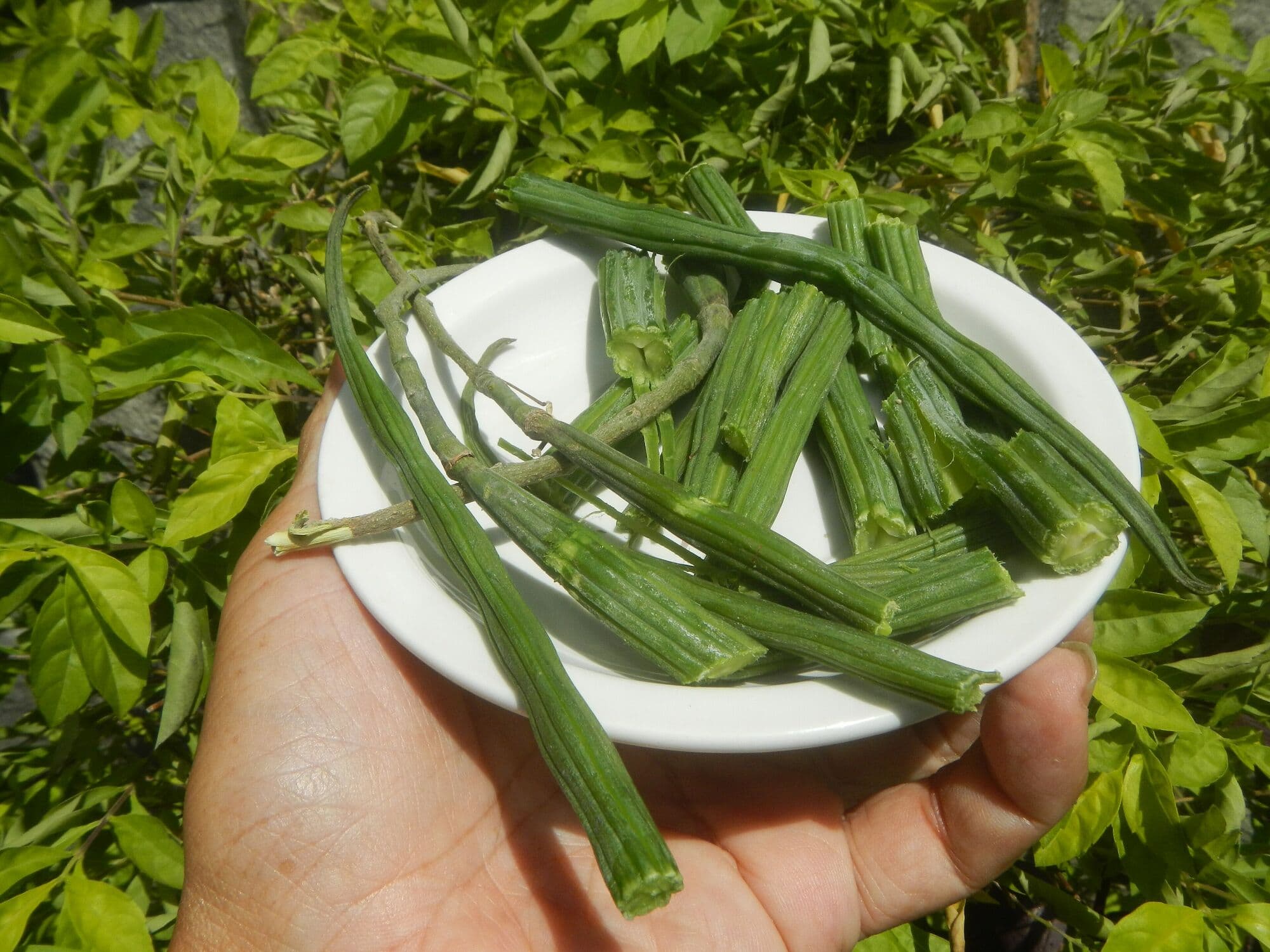
The long, ridged pods are picked young and green and cooked like green beans. They are a staple in Indian cooking (think sambar) and popular in Filipino kitchens, which means there is an existing local market of cooks who already know and want them.
Seeds & ben oil
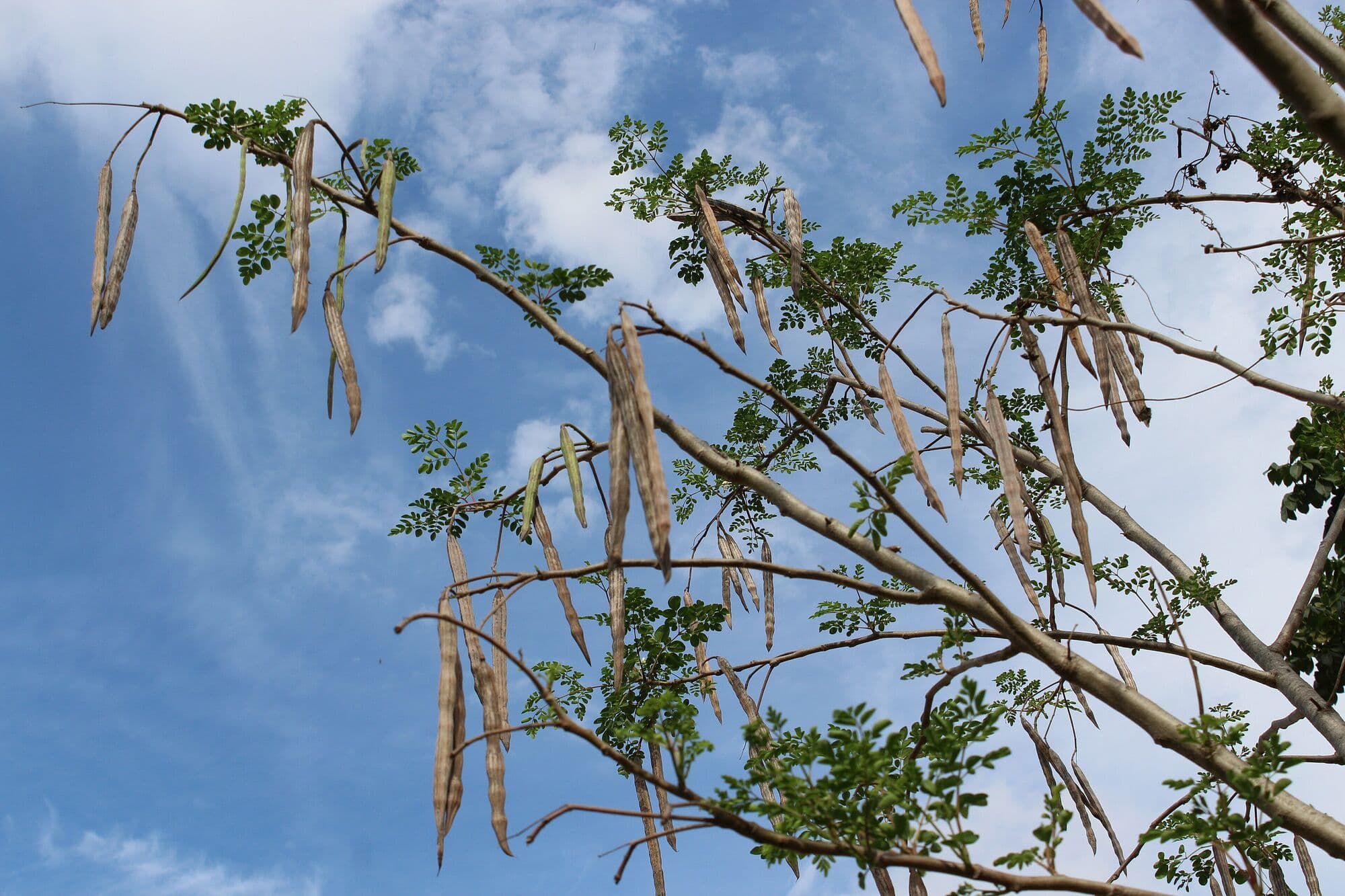
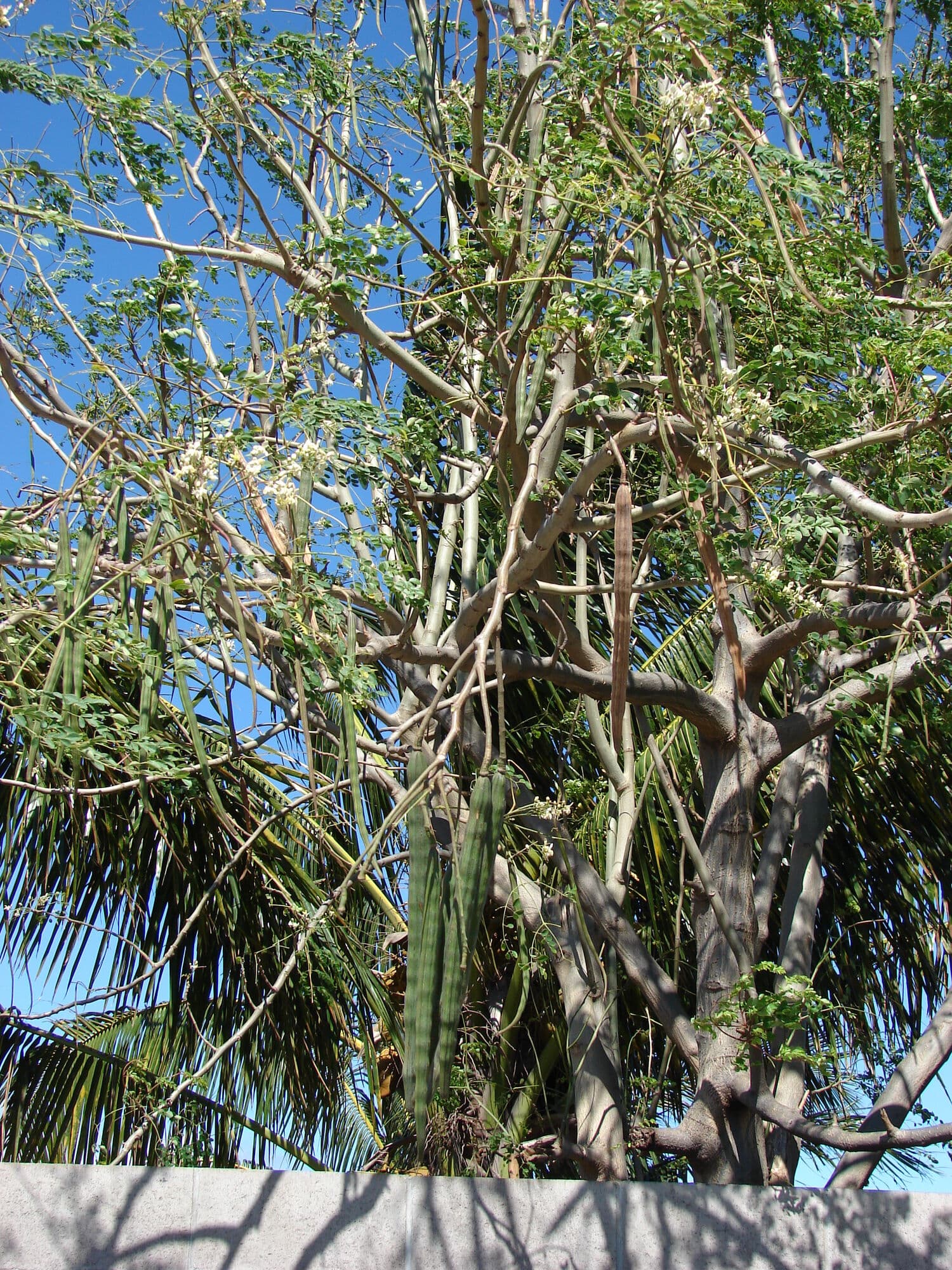
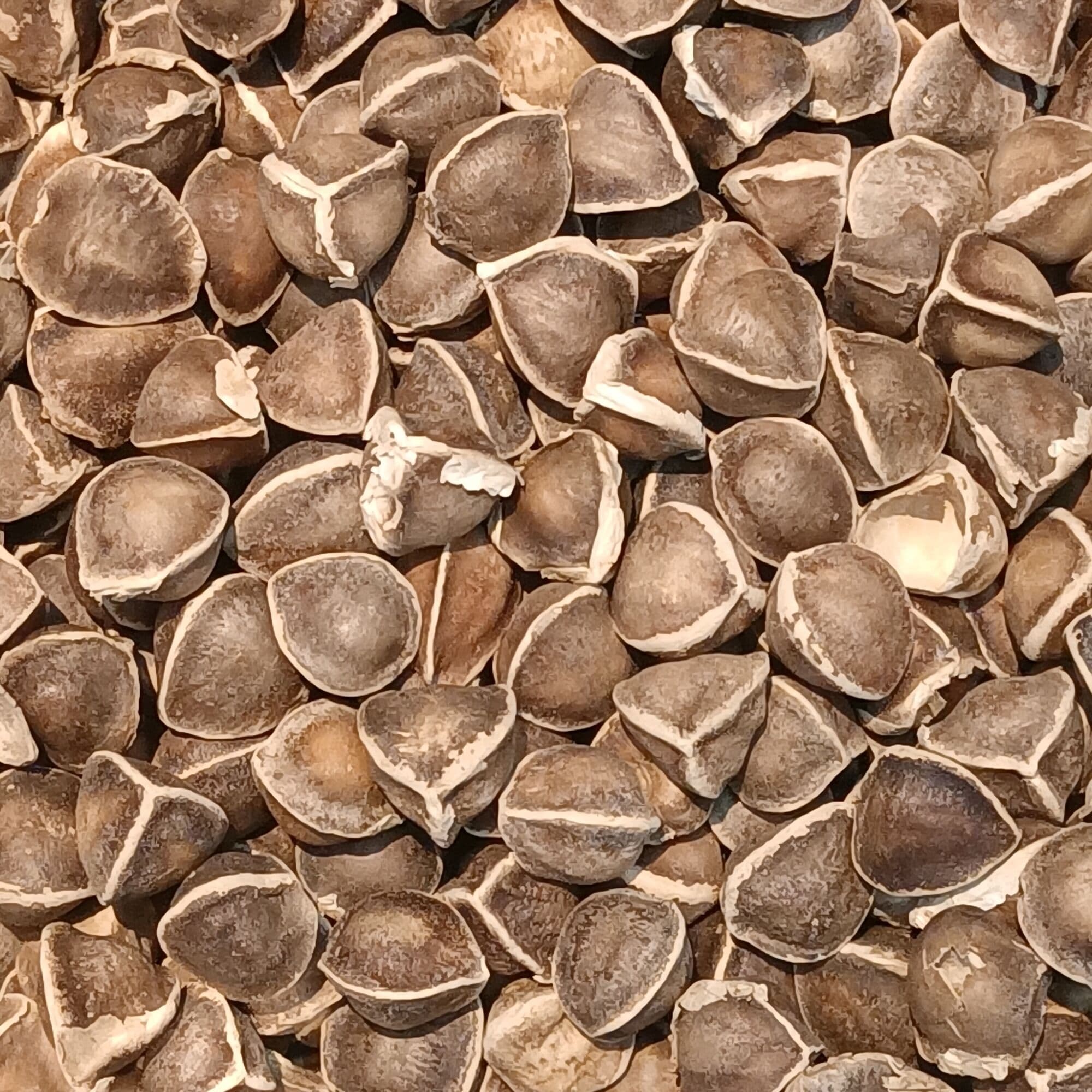
Let the pods dry on the tree and they split to show rows of three-winged seeds. Those seeds are roughly 30–40% oil. The oil — called ben oil — is unusually stable and slow to go rancid, which is why it has long been prized in cosmetics, skin care and even fine-mechanism lubrication.
Seeds are also sellable for planting, and once pressed they leave a seed cake that is useful twice over: as fertilizer, and for cleaning water.
Clean water from a seed
Crushed moringa seed acts as a natural coagulant. Stirred into muddy water, it makes dirt and many bacteria clump together and sink, leaving clearer water on top. It’s used this way in parts of Africa.
Treat it as a first step, not the last
Settling with seed makes water clearer and cleaner. It does not reliably make it safe to drink. Follow it with boiling, a proper filter, or disinfection.
Flowers
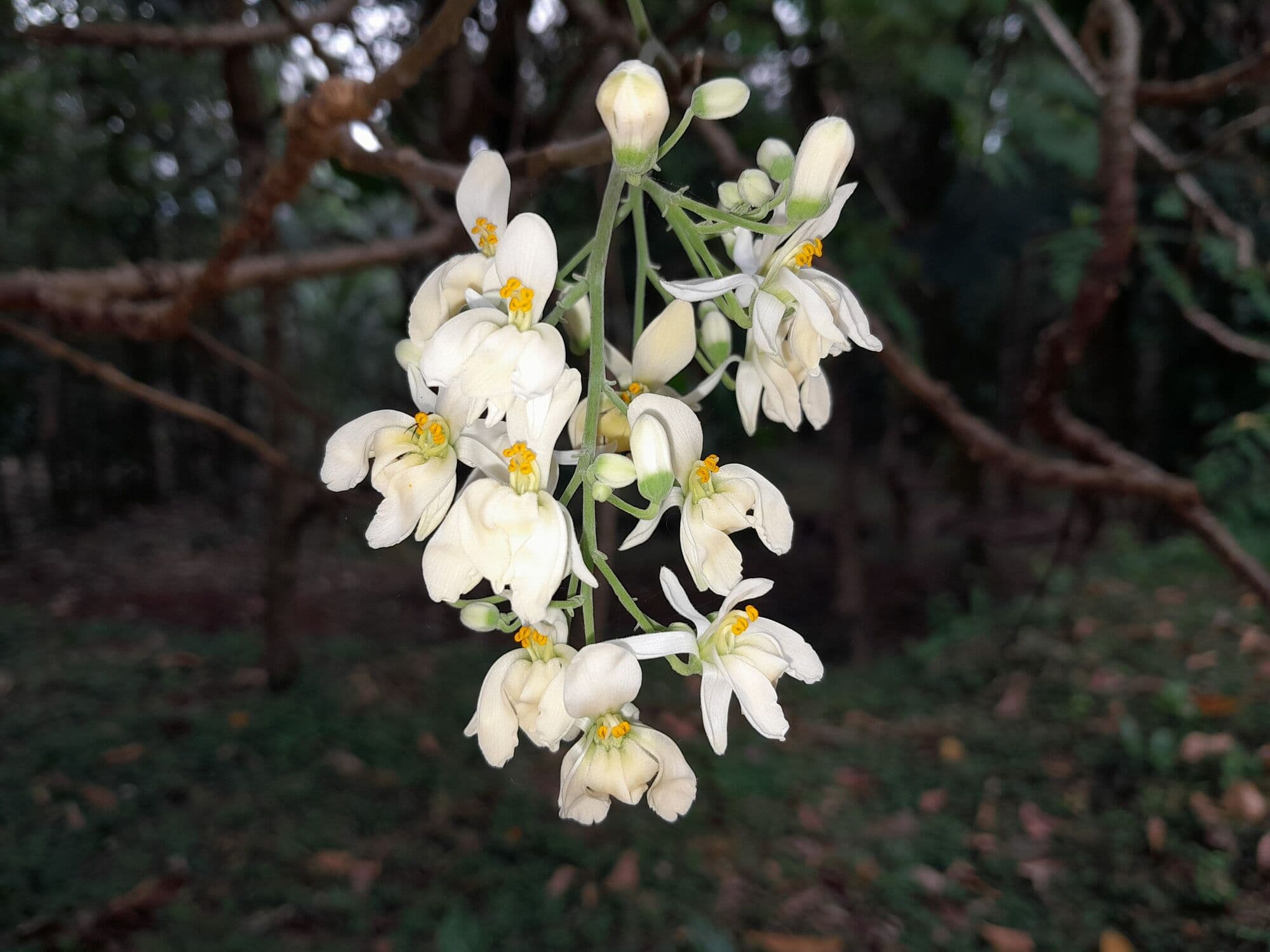
Creamy, fragrant and edible — eaten cooked or made into tea. The trees bloom heavily, and bees love them, which makes a moringa planting a natural home for hives and moringa honey.
Wood, trimmings & biomass
Moringa is pruned hard, and all of that growth is useful: mulch, compost, and animal feed (goats and chickens love the leaves and tender stems). The wood is soft and burns fast, but it’s firewood. Seed husks and shells can go into a simple barrel kiln to make biochar — a charcoal that, mixed into desert sand, helps it hold water and nutrients.
Every part, one table
| Part | What it’s for |
|---|---|
| Leaves | Eat fresh like spinach, dry and grind into powder, make tea. The main product. |
| Leaf extract | Blended, strained and diluted as a growth-boosting spray for other plants. |
| Young pods | Cook like green beans. An existing market in Indian and Filipino cooking. |
| Flowers | Eat or make tea. Bee forage for moringa honey. |
| Seeds | Press for ben oil. Crushed seed clears water. Sell for planting. |
| Seed cake | Fertilizer, or water clarification. |
| Husks & shells | Biochar for sandy soil. |
| Branches & trimmings | Mulch, compost, goat and chicken feed. |
| Wood | Firewood (soft, burns fast). |
| Gum | The sap from bark cuts, traditionally a thickener. Minor. |
| Roots & bark | Leave them alone. Let them anchor the tree. |
What to leave alone
Don’t eat the roots or root bark
Moringa roots look and taste a bit like horseradish, which is how it got that nickname — but the roots and root bark contain a compound that is toxic in quantity.
Pregnant women are usually advised to avoid the root, bark and flowers. Anyone on medication or with a health condition should talk to a doctor before eating a lot of anything new.
And a word about claims: moringa is a nutritious food. It is not a cure. You’ll see a lot of big promises online; this co-op won’t make them, and U.S. law restricts health claims on food labels anyway.
Climate
- A tropical/subtropical tree, happiest in USDA zones 9–11.
- Grows best at 77–95°F and tolerates heat above 110°F.
- Frost is the enemy. Freezing kills top growth; a hard freeze kills the whole tree.
- Very drought tolerant once established, getting by on 10–60 inches of rain a year.
- Demands well-drained soil and hates wet feet. Sandy loam is ideal.
That’s why the plan lives in the low desert. In a place like Cove, Arkansas (zone 7b, single-digit winter lows), moringa can only be an annual leaf crop, a container plant hauled inside for winter, or a greenhouse tree — and it rarely has a long enough hot season to set seed. Around Yuma it can grow nearly year-round and actually make pods.
Growth speed
It’s one of the fastest-growing trees there is. From seed, it can reach 10–15 feet in its first year in warm climates. In the tropics it can flower within 6–8 months and produce pods in the first year. A bred variety called PKM-1 is known for podding quickly and staying short enough to harvest from the ground.